If you are shopping for a night light, colour matters far more than most people realise. Choosing the wrong colour can wake you up almost as thoroughly as flicking on the main overhead light, which rather defeats the purpose of buying a night light in the first place.
Why Colour Temperature Matters So Much at Night
Light affects your circadian rhythm through a set of specialised cells in your eyes that are most sensitive to short wavelength, blue toned light. Standard white LED bulbs, along with most phone and tablet screens, sit heavily within that blue white range, which is exactly why “just quickly checking your phone” at three in the morning so often leaves you wide awake for the next hour.
Longer wavelength light, meaning red, amber and deep orange tones, has a considerably smaller impact on these same light sensitive cells. This is precisely why hospitals, sleep clinics and long haul aircraft crews all commonly use red lighting in nighttime environments where people still need to see and move safely without being fully roused from a drowsy or resting state.
Ranking the Most Common Night Light Colours
- Red. Generally considered the least disruptive option to melatonin and overall sleep onset, and the colour most often recommended by sleep researchers for genuine nighttime use.
- Amber or orange. A close second, softer on the eyes than white light but carrying slightly more blue content than pure red.
- Green. A moderate option, still considerably gentler than white or blue light, though not quite as neutral as red.
- Blue or plain white. The most disruptive option of the four, and generally the one worth avoiding altogether once the sun has gone down.
Why the WillyLight Uses Red and Green Specifically
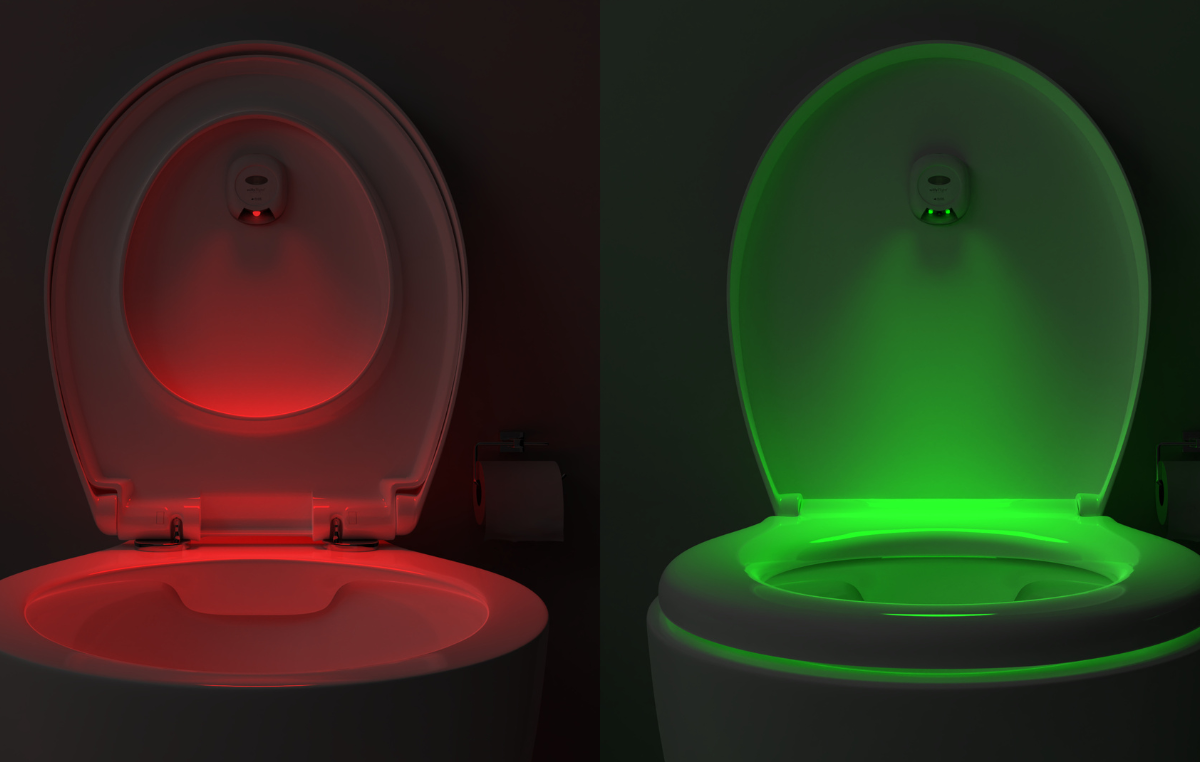
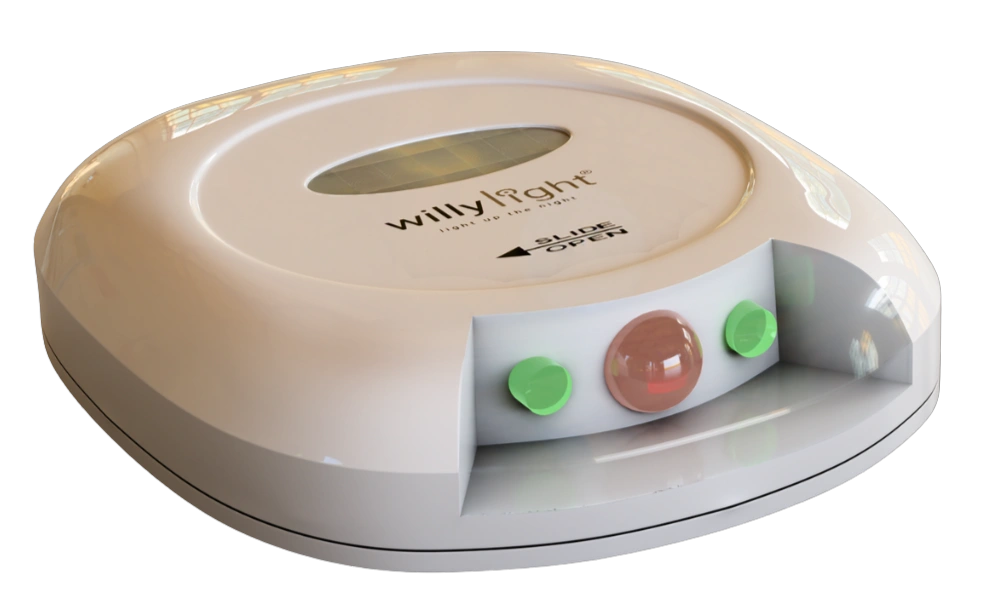
This is not an arbitrary design choice made for visual appeal. The WillyLight was built directly around this body of research, and it glows red when the toilet seat is in the up position, acting as a clear safety warning, and green when the seat is down, indicating it is safe to sit. This gives you a genuinely useful functional signal while relying on two of the least sleep disruptive colours available, rather than forcing a choice between a single bright white beam that solves visibility but wrecks your sleep, or no light at all, which introduces its own safety risks in the dark.
A Practical Way to Think About It
Imagine two households side by side. In the first, everyone still uses the main bathroom light for nighttime visits, flicking it on and off multiple times a night. In the second, everyone relies on a soft red and green glow that comes on automatically and requires no thought at all. Over a single night the difference might feel small, a few extra minutes of grogginess here or there. Over a year, the difference compounds into a genuinely large gap in overall sleep quality, particularly for anyone getting up more than once a night.
Beyond Sleep, a Practical Safety Benefit Too
There is a second, less discussed advantage to the red and green colour system beyond sleep quality alone. Because the colour itself communicates information, seat up means red, seat down means green, there is no need to squint, focus, or fully wake up simply to work out the state of the toilet in the dark. This matters particularly for women and children using a shared bathroom overnight, removing the guesswork entirely and reducing the chance of an unpleasant surprise.
How to Check What Colour a Night Light Actually Produces
Product listings do not always make the actual colour output obvious, particularly for cheaper, generic night lights sold in multipacks. A genuinely useful check is to look closely at product photos taken in a dark room, rather than relying on marketing copy alone, since many products described loosely as warm or soft are, in reality, simply dimmed white LEDs rather than true red or amber light. A dimmed white light still contains the same disruptive blue wavelengths as a full brightness white light, it is simply less intense overall, which is a meaningfully different thing from genuinely shifting the colour temperature toward the red end of the spectrum.
What This Means for Shared Bathrooms and Ensuites
In a shared bathroom or an ensuite attached to a bedroom, colour choice matters even more than in a standalone hallway night light, simply because any light produced is likely to reach a sleeping partner as well as the person actually using the bathroom. A red or green light kept low and directional, aimed specifically at the toilet bowl rather than spread broadly across the room, minimises the amount of light that spills over toward a sleeping partner, which is a meaningful advantage over a plug in night light positioned in a fixed wall socket that cannot be aimed at all.
Choosing the Right Product for Your Household
Not every night light on the market has been designed with this research in mind, and plenty of cheaper options default to plain white LEDs simply because they are the easiest and cheapest to manufacture. When comparing options, it is worth specifically checking the colour output rather than assuming all night lights are functionally equivalent. The WillyLight is priced at $39.99 with free shipping, comes with a 30 day money back guarantee, and every unit is individually tested before it ships, so there is very little financial risk in trying it out to see whether the red and green system makes a genuine difference to how quickly you and your household fall back asleep after a nighttime bathroom trip.
The Takeaway
Colour is not a minor cosmetic detail when it comes to nighttime lighting, it is arguably the single most important factor after the decision to use a light at all. A well chosen red or green light can provide all the visibility needed for a safe bathroom trip while doing very little to disturb the sleep cycle, whereas a poorly chosen white or blue toned light can undo much of the benefit of getting up in the first place, regardless of how dim it is set.