If you have noticed yourself getting up more often at night than you used to, you are not imagining it, and you are certainly not alone. There is, however, a meaningful difference between what counts as a normal part of ageing and what is genuinely worth mentioning to a doctor, and it is worth understanding where that line sits.
What Changes as We Age
A number of physiological shifts make nighttime bathroom trips more common as people get older, including the following.
- Reduced antidiuretic hormone production. The body produces less of the hormone responsible for concentrating urine overnight, meaning more urine is produced while you sleep than used to be the case.
- Reduced bladder capacity and elasticity. The bladder holds less than it once did and signals that it is full earlier in the filling process.
- More prevalent underlying conditions. An enlarged prostate in men, a weakened pelvic floor in women, sleep apnoea and diabetes all become more common with age, and each can independently increase nighttime urination.
- Medication changes. Many medications commonly prescribed later in life, particularly for blood pressure, have a diuretic effect that increases nighttime urine production.
Research suggests it becomes increasingly common for adults to wake at least once a night to urinate as they get older, with roughly one in three adults over the age of thirty already waking at least twice a night. If that describes you, you are firmly within what researchers would consider normal territory.
When It Is Worth a Conversation With Your GP
- Waking three or more times a night on a regular basis.
- A sudden, noticeable change in frequency or urgency compared with your usual pattern.
- Pain, burning or blood present when urinating.
- Waking up feeling an urgent need to go but producing very little each time.
None of these symptoms are cause for panic, but they are worth a straightforward conversation with your GP rather than something to quietly manage alone.
Making the Trips Themselves Safer and Less Disruptive
Whatever the underlying cause turns out to be, the trip itself carries two genuine risks as we age, disrupted sleep and an increased chance of a fall. Both risks are addressed by the same simple fix, soft, automatic, low glare lighting that removes the need to fumble for a switch in the dark or navigate blind.
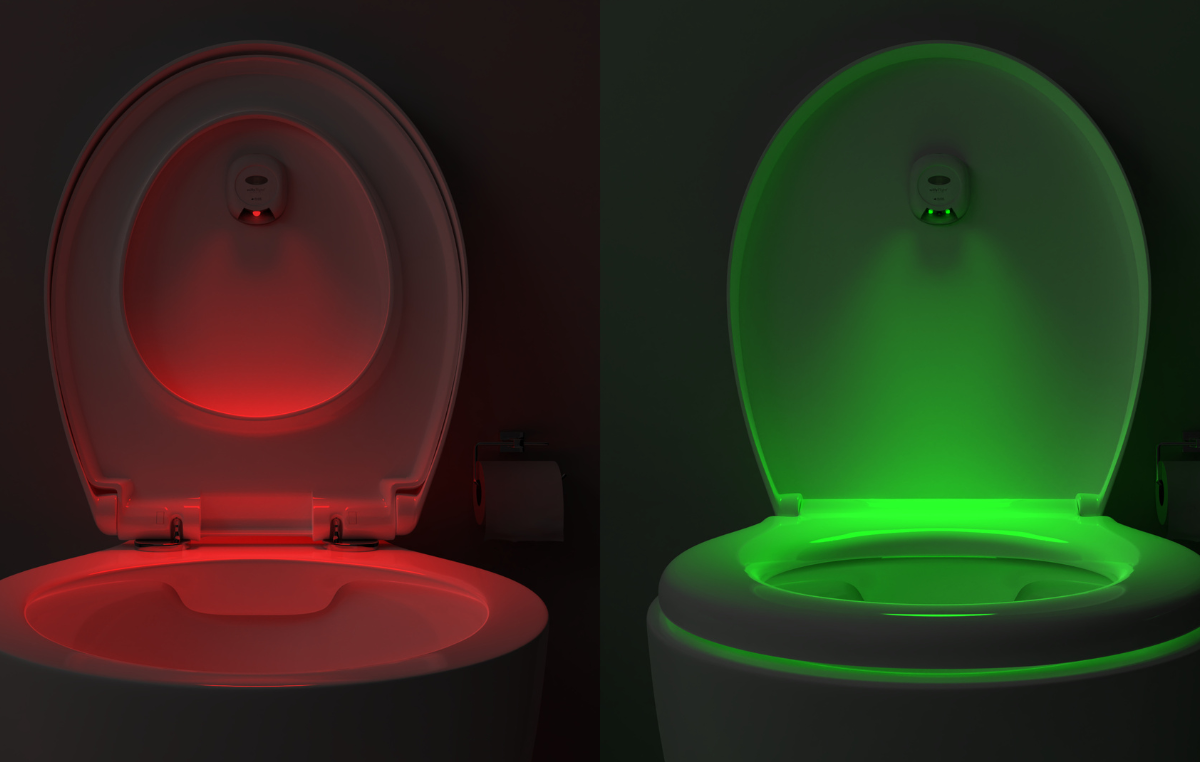
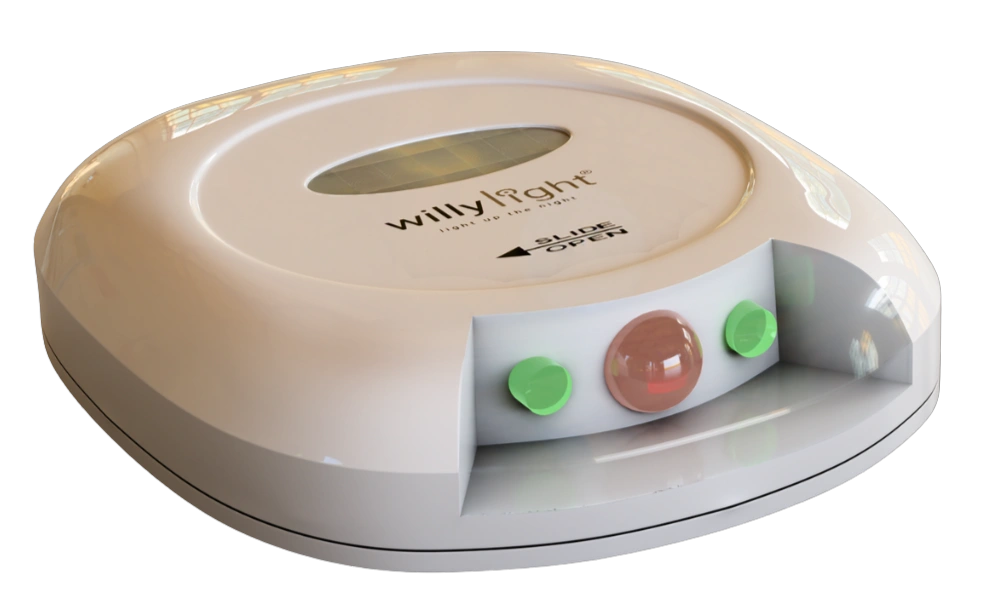
This is precisely why products like the WillyLight are increasingly recommended as part of a broader home safety setup for older adults, often sitting alongside grab rails and non slip mats as one of the simplest, lowest cost changes on a typical falls prevention checklist. It attaches directly to the underside of the toilet lid, uses electronic sensors to detect movement, and glows a soft red or green depending on whether the seat is up or down, removing any need to guess in the dark.
How Nighttime Patterns Typically Change Decade by Decade
While every individual differs, research broadly suggests a fairly consistent pattern across the decades. In the thirties and forties, occasional nighttime waking is common but not yet universal. By the fifties and sixties, waking at least once a night becomes the norm for the majority of people, driven by the gradual hormonal and bladder changes described earlier. From the seventies onward, waking two or more times a night becomes increasingly common, often compounded by other age related health conditions and medications. Understanding this general trajectory can help take some of the anxiety out of noticing the change in your own body, since it reflects a well documented, broadly universal pattern rather than something unusual happening specifically to you.
Talking About It With a Partner or Family Member
Nighttime bathroom trips are rarely discussed openly, even within families, despite being one of the most common shared experiences of ageing. Bringing it up directly with a partner, adult child, or GP, rather than quietly managing it alone, often reveals that the same concerns and questions are shared far more widely than most people initially assume. This can also open the door to practical conversations about home safety changes, without the topic feeling awkward or overly personal once it is out in the open.
A Realistic Way to Think About Ageing and Nighttime Trips
Getting up once or twice a night as you get older is not a sign that anything has gone wrong, it is a well documented and extremely common part of the natural ageing process. What is within your control is how disruptive and how risky each of those trips actually is, and that is where small, practical changes tend to make the biggest and most immediate difference. The WillyLight is priced at $39.99 with free shipping, comes with a 30 day money back guarantee, and every unit is individually tested before it is sent out, making it a low risk option worth considering as part of a broader plan to keep nighttime bathroom trips as safe and undisruptive as possible.
A Final Word on Normal Versus Something to Watch
The overwhelming majority of people who notice more frequent nighttime bathroom trips as they age are experiencing a completely normal, well understood physiological process rather than a sign of serious illness. Keeping an eye on any sudden changes, discussing genuine concerns with a GP when they arise, and making sensible, low cost adjustments to lighting and evening habits will cover the vast majority of what most people ever need to do about it.
How Partners and Family Members Can Help
If someone close to you has mentioned getting up more often at night as they age, one of the most genuinely helpful things you can do is treat it as the completely ordinary experience it usually is, rather than reacting with concern that might make them feel self conscious about something largely outside their control. Practical, low key support, such as suggesting a shared upgrade to bathroom lighting, tends to be far more welcome than a conversation that inadvertently frames the change as a worrying sign of decline.
Building Good Habits Early Rather Than Waiting
There is a reasonable case for making simple changes like automatic bathroom lighting well before nighttime trips become frequent or genuinely disruptive, rather than waiting until the problem feels significant enough to warrant action. Establishing good nighttime habits early tends to make the gradual increase in bathroom trips that comes with age feel considerably less disruptive when it does eventually happen, since the household is already set up to handle it smoothly.