Sleep divorce, meaning couples who choose to sleep in separate rooms or separate beds, has become a genuinely popular trend, and for some couples it really is the right decision. For a great many others though, the actual problem is not sharing a bed at all. It is a small handful of specific, repeatable habits quietly disrupting one partner’s sleep, night after night, without either person fully realising it.
The Usual Suspects
- Bathroom lights. A bright overhead light at two in the morning wakes a light sleeping partner just as effectively as it wakes the person who actually needed to get up.
- Fumbling around in the dark. Bumping into furniture, doorframes or the edge of the bed itself while trying to avoid switching on a light creates its own kind of disruption.
- Phone checking. A quick glance at a phone “just for a second” so often turns into scrolling, complete with screen glare and the occasional notification sound.
- Snoring and restless movement. A separate issue entirely, but worth mentioning, and often better solved with a mattress or pillow change than by relocating to another room altogether.
Fixing the Bathroom Trip Disruption Specifically
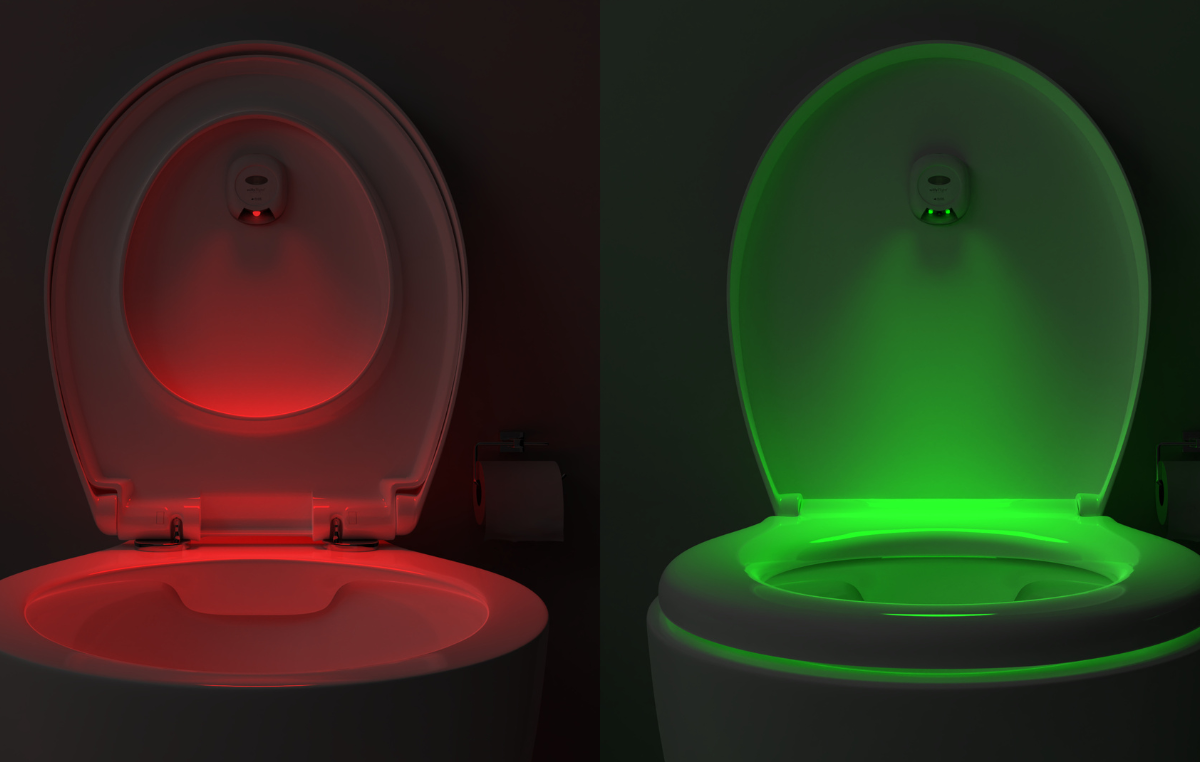
For couples who share an ensuite, or whose bedroom sits close to the main bathroom, nighttime toilet trips are one of the single biggest sources of disrupted sleep for the partner who is not actually the one getting up. The good news is that the fix is not complicated. Replace the usual routine of flicking the switch, walking through in full brightness, and flicking it off again, with something automatic and gently glowing instead.
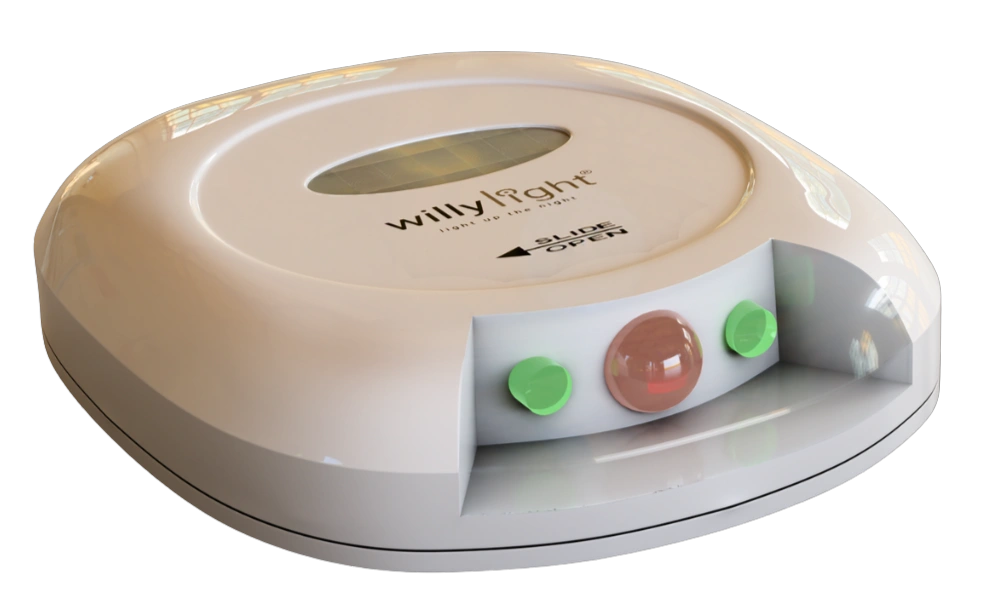
A motion sensor light that switches on only in the toilet area, glows softly, and turns itself off the moment you leave means your partner never has to fully wake up just to register what happened. This is precisely the problem the WillyLight was designed to solve. One customer, Kathleen, described being on the fence for a long while before finally buying one, largely because her husband kept accidentally setting off a standard motion sensor light during his own nighttime trips. She said her husband was completely sold from the very first night, and that her own delight at no longer being disturbed was just as significant.
Before You Consider Separate Rooms
It is worth trying to fix the lighting problem first, before jumping straight to the more drastic step of separate bedrooms. Installing a device like the WillyLight takes only a few minutes, costs a fraction of what most couples would spend rearranging their sleeping situation, and for a genuinely large number of couples, it turns out to be the entire issue in the first place.
What to Try First, in Order
- Swap the bathroom light for an automatic, low glow alternative such as the WillyLight.
- Agree on a no phone checking rule during nighttime bathroom trips.
- Address snoring separately, through a mattress, pillow or medical assessment if needed.
- Only consider separate sleeping arrangements once the above have genuinely been tried and have not resolved the issue.
Why the Sleep Divorce Conversation Can Feel Loaded
For a lot of couples, even raising the topic of separate rooms carries an emotional weight that goes well beyond the practical sleep issue itself, touching on questions of intimacy, commitment and what a shared bedroom is supposed to represent. This is precisely why it is worth exhausting the smaller, more mechanical fixes first, not because separate rooms are inherently a bad choice, but because for many couples the emotional cost of that conversation is considerably higher than the cost of simply changing a light fitting or adjusting an evening routine.
How to Raise the Topic With a Partner Without It Feeling Like a Complaint
If nighttime disruption has been an ongoing issue, it can help to frame the conversation around a shared goal rather than a personal grievance. Rather than opening with “you keep waking me up”, a more constructive starting point is something like “I think we could both sleep better if we changed a few small things about our nighttime routine”, followed by a specific, practical suggestion such as trying an automatic bathroom light for a week or two. Framed this way, the conversation becomes collaborative rather than accusatory, which tends to produce a far more receptive response from a partner who may not have realised the extent of the disruption they were causing.
Sleep divorce can absolutely be the right answer for some couples, and there is no shame in it if that is what genuinely works. But for many households, the actual source of friction turns out to be something far smaller and far cheaper to fix than either partner initially assumed. The WillyLight is priced at $39.99 with free shipping and comes with a 30 day money back guarantee, making it a low risk first step worth trying before any bigger changes to your sleeping arrangement.
A Realistic Timeline for Noticing a Difference
Most couples who make this specific change report noticing a difference within the first week, simply because the bright light disruption tends to be the most immediately obvious and most consistently repeated source of nighttime waking in a shared bedroom. Giving any change like this a fair two week trial, rather than judging it after a single night, is generally the best way to assess whether it is genuinely solving the underlying problem.
What to Do if the Lighting Fix Alone Is Not Enough
For some couples, bathroom lighting turns out to be only part of the disruption, and other habits such as snoring, restless movement, or mismatched sleep schedules continue causing friction even after the lighting issue is resolved. In these cases, it is worth systematically working through the remaining common culprits one at a time, rather than assuming that because one fix did not solve everything, nothing short of separate rooms will work. Many couples find that addressing two or three specific, well identified issues resolves the vast majority of nighttime disruption, even when a single change alone was not quite enough.
Revisiting the Conversation as Circumstances Change
Sleep needs and nighttime habits often shift over time, particularly around major life changes such as a new baby, ageing, illness, or a change in work schedule. A solution that worked well for years may need revisiting periodically, and treating nighttime sleep arrangements as something worth checking in on occasionally, rather than a topic only raised when things have become genuinely difficult, tends to keep small issues from building up into larger ones over time.