Ask any long married couple what actually causes friction in their day to day life and the answer is rarely anything dramatic. It is almost always the small stuff. Socks left on the floor. The eternal dishwasher stacking debate. And, in an enormous number of households across the country, the humble toilet seat.
The Classics
- Toilet seat up or down, an argument that is genuinely as old as indoor plumbing itself.
- Bathroom mats that seem to need constant replacing, a direct and rather unglamorous cost of nighttime “misses”.
- Being woken up by a partner’s bathroom trips, covered in more detail in our related article on stopping this altogether.
- Squeezing the toothpaste tube from the middle instead of the end.
- Leaving cupboard doors open at exactly head height.
Why the Toilet Seat Argument Never Actually Gets Resolved
The honest answer is that expecting anyone to reliably remember a habit, every single time, at two in the morning, while half asleep, is more optimistic than realistic. Reminder notes and post it signs rarely survive more than a week before they are ignored or quietly removed. The usual habit change approach keeps failing for the simple reason that it is fighting against basic human tiredness, and tiredness generally wins.
A Different Approach: Solve It With the Environment, Not the Person
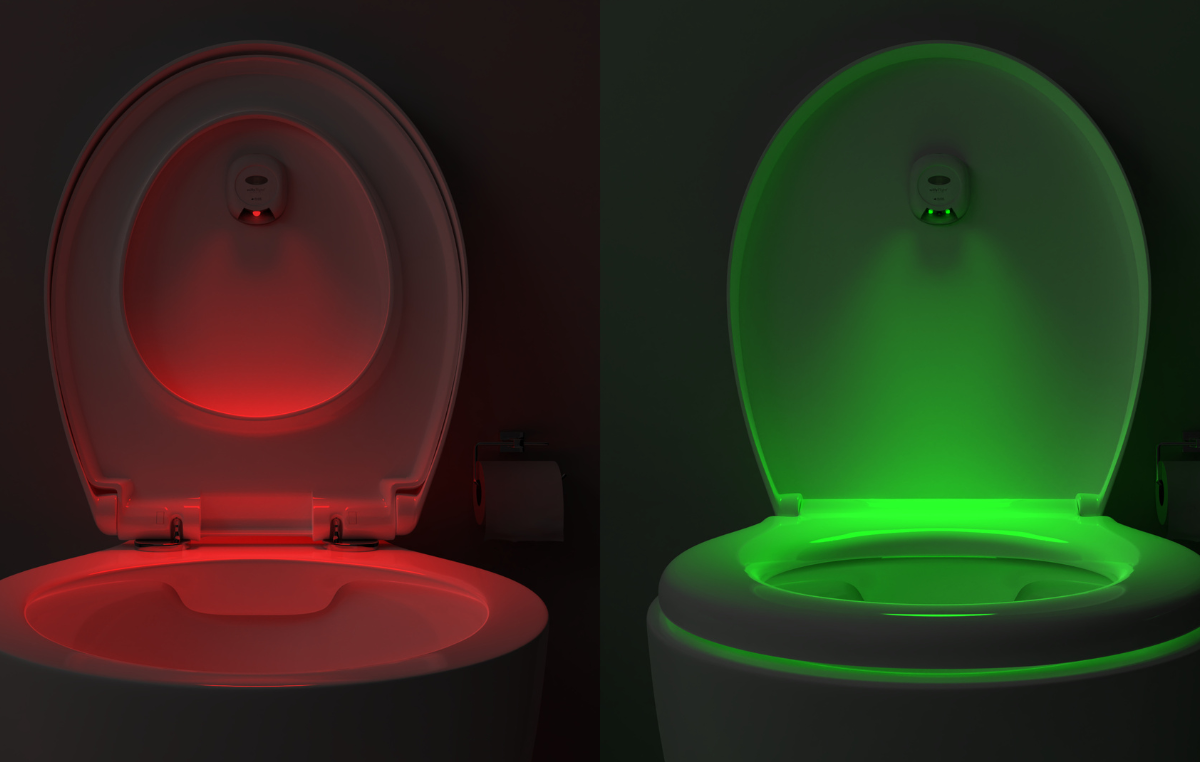
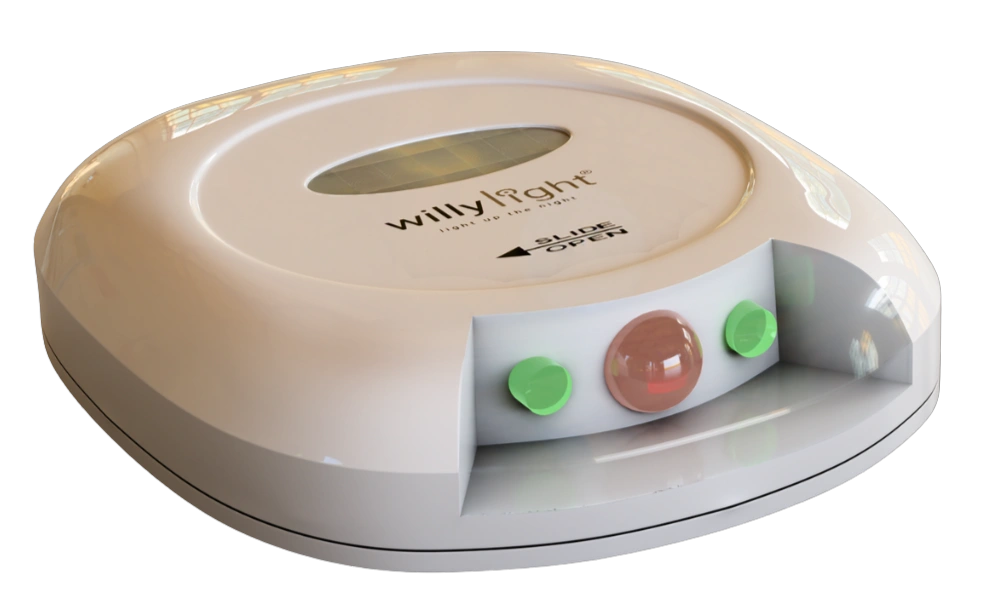
Rather than continuing to try and change someone’s behaviour directly, some couples have taken the more pragmatic route of changing the environment instead, so the “mistake” becomes far less likely, or far less costly, in the first place. This is exactly what the WillyLight does for the toilet seat argument specifically. It glows red when the seat is up and green when it is down, meaning there is no guessing required in the dark and no argument the next morning about who forgot what.
One customer described the change simply, noting that the mats around the toilet bowl no longer needed to be replaced daily once the light was installed, adding that his wife was very happy about that particular improvement. It is a small, almost comically specific fix, but for the households it applies to, it genuinely removes one of the most persistent and repetitive sources of friction from daily life.
Applying the Same Logic Elsewhere
The broader lesson here extends well beyond just the toilet seat. Wherever a recurring argument stems from someone forgetting to do something reliably, particularly under tired or distracted conditions, it is often far more effective to redesign the environment so the mistake becomes harder to make, rather than relying on memory or willpower alone. It will not fix the dishwasher stacking debate, unfortunately, but it is a genuinely useful place to start.
Why Small Arguments Cause Disproportionate Friction
Relationship researchers have long noted that it is often the small, repeated irritations, rather than occasional major disagreements, that erode goodwill most steadily in a long term relationship. A single big argument can be resolved and moved past relatively quickly, whereas a small argument that resurfaces weekly for years slowly builds a background level of frustration that is harder to pinpoint and harder to resolve through a single conversation. This is precisely why fixing a genuinely recurring irritation, however minor it might sound to an outsider, can have an outsized positive effect on overall relationship satisfaction.
A Lighthearted Household Experiment
If the toilet seat debate has been a running joke, or a running argument, in your own household for years, it is worth treating a fix like this as a bit of an experiment rather than a serious intervention. Install it, see what happens over the following month, and note honestly whether the specific argument actually stops coming up. Many couples report being pleasantly surprised at how much a small, almost silly sounding change can quietly remove a source of friction that had become such a fixture in the relationship that neither person had seriously considered it might have a simple fix.
Other Small Fixes Worth Trying With the Same Mindset
Once you start looking at recurring arguments through this environment first lens, other small fixes tend to suggest themselves fairly naturally. A designated toothpaste tube per person removes the middle squeezing debate entirely. Soft close hinges fitted to cupboard doors remove the head height collision problem without anyone needing to remember to close them gently. None of these fixes require a difficult conversation or a change in anyone’s underlying character, they simply remove the opportunity for the same small mistake to keep happening in the first place.
A Closing Thought on Long Term Relationships
Every long term relationship accumulates its own set of small, recurring frictions over the years, and very few of them are worth a serious argument on their own merits. Treating them with a bit of humour, and a willingness to solve them practically rather than through repeated reminders, tends to keep the overall relationship considerably lighter and more good humoured over the long run. The WillyLight is available for $39.99 with free shipping and a 30 day money back guarantee, making it an easy, low cost experiment to run in your own household before the same argument comes up for the hundredth time.
Why This Approach Tends to Outlast Behaviour Based Fixes
Behaviour based fixes rely on ongoing effort and memory, both of which naturally fade over time, particularly once the initial motivation following an argument wears off. Environment based fixes, by contrast, keep working indefinitely without requiring any renewed effort, which is precisely why they tend to produce a more lasting resolution to genuinely recurring household friction points.
A Light Hearted Final Thought
Every household has its own version of the toilet seat debate, whether that is genuinely about a toilet seat or something else entirely. Recognising the pattern, a small, repeated frustration that behaviour change alone never seems to fix, is often the first step toward finding a genuinely lasting solution rather than repeating the same argument for years to come.
A Practical Summary
Reminders and post it notes rely on memory at the exact moments memory is least reliable, tired, distracted, or half asleep. Redesigning the environment, whether that is a colour coded light, a dedicated toothpaste tube, or soft close hinges, removes the need for memory altogether, which is precisely why this approach tends to succeed where years of gentle reminders never quite managed to.